Guides
Language
EnglishCurrency
US dollar · $Prices on GetYourGuide appear in your chosen currency.
Guide · Boards and gear
Sand board and gear: what you ride, wax and wear
A sand board looks like a small snowboard, but its base, straps and wax are made for dry sand. Here is what the board is, which shapes exist, how wax works, and what to bring yourself.
Editorial team, sandboardingdoha.comUpdated October 26, 2026about 6 min to read19 sources
What you need to know
What a sand board is made of
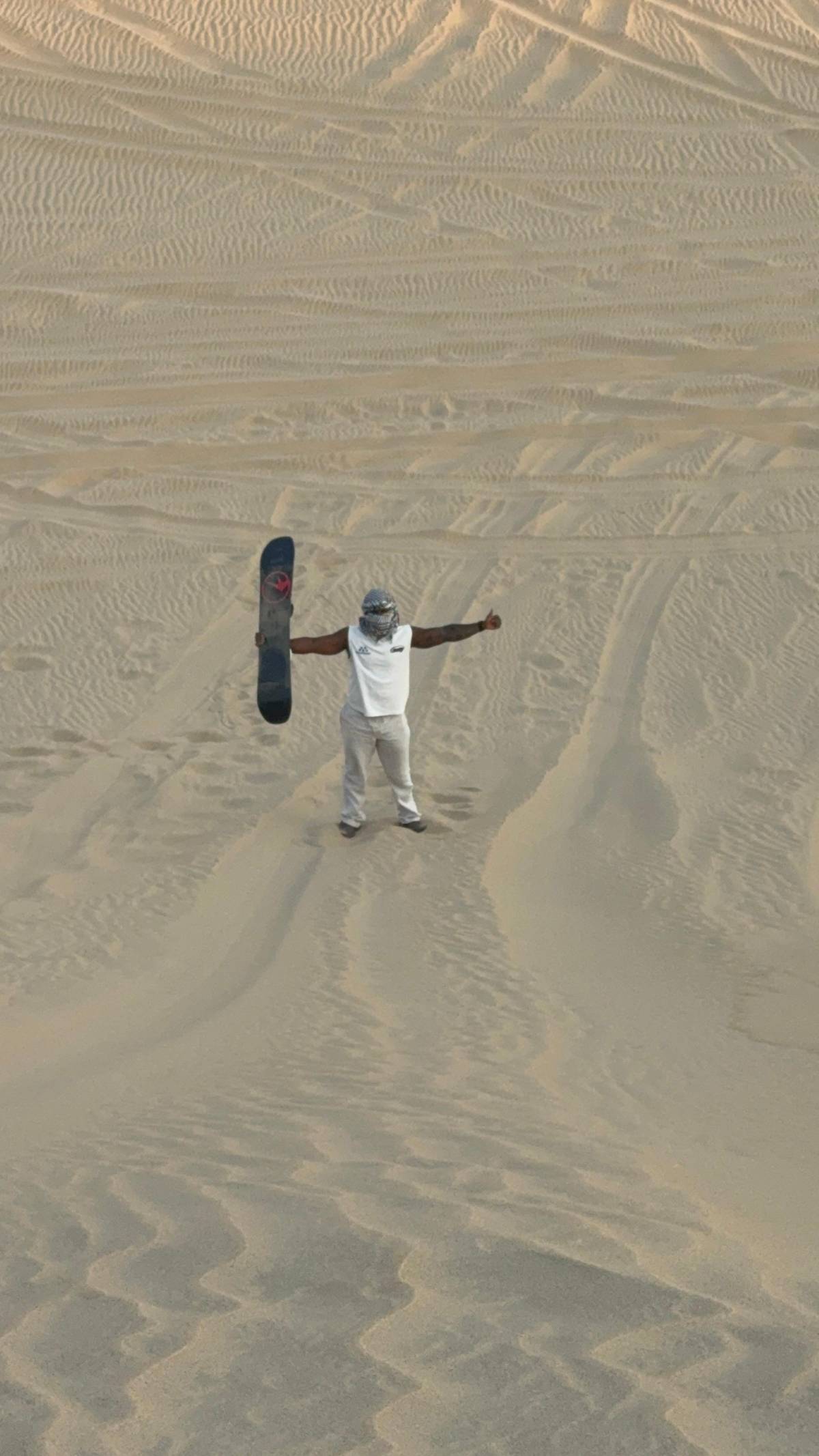
A sand board is a deck you stand on sideways, with footstraps to keep your feet on it as you ride down a dune.2 What makes it a sand board rather than a snowboard is the underside: the National Park Service describes boards and sleds made specifically for sand, with an extra slick base material and a special wax, and says these work best in most conditions.1
The deck is usually laminated wood. One manufacturer builds its adult sand sled from maple and birch hardwood ply with a white race base laminated underneath, and adds a 1 inch thick closed-cell foam seat.5 Boards for standing use the same idea without the seat: a stiff, light deck and a smooth base that sand can polish rather than grip.
That base needs a break-in. The same maker says new sleds and sandboards have a break-in period while the sand polishes the new base smoother and smoother.6 A board that has already seen a season of tour groups has usually done that work for you, which is one quiet advantage of borrowing rather than buying. A brand-new board can feel slow on its first runs for exactly that reason, so do not judge the sport by them.
Board care
Looking after a board through a session
-
Before the first run
Check the base
A smooth, intact base slides; a scratched one sticks.7
-
Every run
Wax it
Rub a light coat over the base before each descent.4
-
On the slope
Straps snug
Tight enough to hold your feet, loose enough to step out.
-
Between runs
Keep it clean
Carry the board base-up so it stays smooth.
-
After a hot day
Right wax
A high-melt wax holds up under desert heat.8
Length and shape: which board to ride
Sandboards come in lengths that track the riding style. One maker's range runs from a 100 cm and a 105 cm terrain board through a 115 cm pro board and a 121 cm free ride board to a 130 cm jump board and a 149 cm freestyle board.3 For comparison, Britannica puts the average snowboard at about 1.5 meters long.9
Shape changes how a board rides. That maker's 121 cm free ride board has full rocker, a gentle upward curve along its length, and twin tips, with a flex that helps it pop off jumps and absorb landings.10 Its 105 cm terrain board has a rocker front half and a near-flat back half, which it describes as more stable than a full rocker deck.11
For a first afternoon none of this needs to worry you. A shorter, stable board is easier to turn and to carry back up the dune, and that is what a beginner should ask for. Longer, springier boards reward speed and tricks once you can already hold an edge across the slope. If a guide offers you a choice of boards, take the shortest one for the first runs and swap up later.
Time on the board
Minutes of sandboarding on Doha trips
One maker's range
Sandboard types by length
Decision helper
Which ride suits you?
Choose by how you want to come down
Sandboards have footstraps for riding standing up.2
Sleds have a padded seat and handles to hold.2
A rocker front and near-flat back is more stable.11
Full rocker and recoil flex help it pop off jumps.10
Our pick includes sandboarding in the trip.
Sandboards and sand sleds are specifically made for sand, featuring a special design with extra slick base material and special wax; these work best for sliding in most conditions.
Straps, pads and why there are no bindings
Snowboards hold your boots with bindings.9 Sandboards usually do not. One maker's general-purpose board comes standard with foot pads, heel straps and size-adjustable foot straps, plus a block of wax, ready to ride.12 You ride in ordinary closed shoes and slide your feet under the straps.
Straps make the board easy to get off, which matters when you fall on a slope or step off at the bottom to walk back up. Pull them snug enough that your feet do not lift out on a bump, but not so tight that you cannot free a foot quickly. Check them again after every fall, because sand works its way under the pads and loosens the fit.
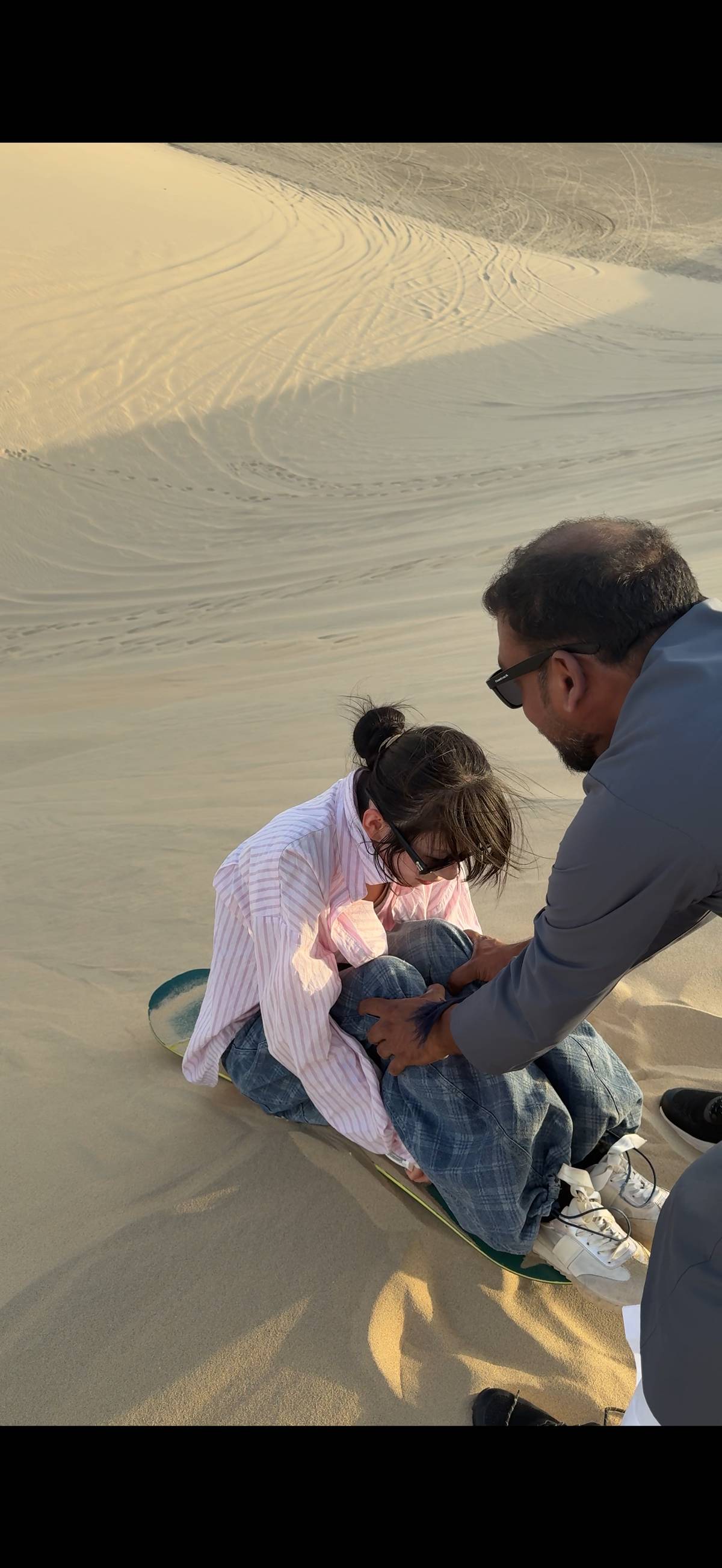
If straps feel like too much, a sled is the seated alternative. Sand sleds have a padded seat and handles, according to the National Park Service, and you ride them sitting or lying with your feet pointing downhill.213 A sled is a gentle start for children and nervous first-timers.
Checklist
Your sandboarding kit
The tour provides
- A board for the dune session
- Unlimited water on our pick
- A guide who knows the slope
You bring
- Closed sports shoes
- Polarised sunglasses, hat, sunscreen
- Travel insurance that covers activities
- A zipped pocket for your phone
Cost calculator
Price a trip with the board included
Enter your group size for three Doha trips with sandboarding.
Total from$64
per person from $32
Check availabilityfree cancellationEach trip's starting price on its booking platform, times your party size and converted at today's ECB rate; the final amount appears at checkout.
Video
How to sand sled and sandboard at Great Sand Dunes
Nothing loads until you tap play.
Wax: the part beginners forget
Sand is not slippery the way snow is, so the wax is what makes the slide.14 One sandboard wax is applied by simply rubbing a light coat over the base before each run, and a single block generally lasts 4-6 good sessions.4 A good sled with an intact slick base and a coat of the proper wax can travel quickly down a dune.7
Wax comes in grades for temperature. The same maker sells a hot-weather wax with a high melt point and hardeners to keep it on the base under heat and friction, meant for desert dunes in summer and not for medium or low temperatures.8 Its waxes are fully synthetic, with no petroleum products, and biodegradable.15
On a tour the guide usually hands you a board that is already waxed. Rub on a little more at the top if the board feels sticky, keep the base out of the dirt between runs, and you will feel the difference within a single descent. If you bring your own board to Qatar, pack a block of wax suited to warm sand rather than snow.
Can you build a DIY sandboard?
A DIY sandboard is a tempting idea, but the park services' experience is against it. The National Park Service at Great Sand Dunes says cardboard, saucers and soft plastic items do not slide on sand: they dig into it or drag on it.16 Snow sleds, snowboards and skis only slide on very wet sand after rain or snow, and the surface is usually dry.17
There is one exception, and it depends on the dune. At White Sands, where the dunes are gypsum, the park says waxed plastic snow saucers work best.14 That tells you the two things any homemade board needs to get right: a smooth, hard base and wax that suits the sand you ride.
For a few runs on a trip, borrowing beats building. The tours from Doha include a board in the price, so the kit you actually need to own is much simpler: the right shoes, eye protection and sun protection, covered below.
The clothing and kit you bring yourself
Shoes are the first piece of sandboard gear to get right. The National Park Service says dune sand can pass 150 degrees F on summer afternoons and that boots or tennis shoes are needed then, because sandals are not adequate.18 Desert trips from Doha set the same rule: one sunset safari requires sports shoes for sandboarding.
Protect your eyes and skin. Qatar Tourism advises applying sunscreen generously and wearing polarised sunglasses to cut the glare in the desert.19 Our recommended trip lists sunglasses, a sun hat, sunscreen, comfortable clothes and sports shoes as the things to bring.
Then think about sand. A cap that fits tightly, a zipped pocket for your phone and a spare pair of socks for the drive back are small things that make a big difference. Leave luggage and large bags behind: our pick does not allow them on board.
What the tours from Doha provide
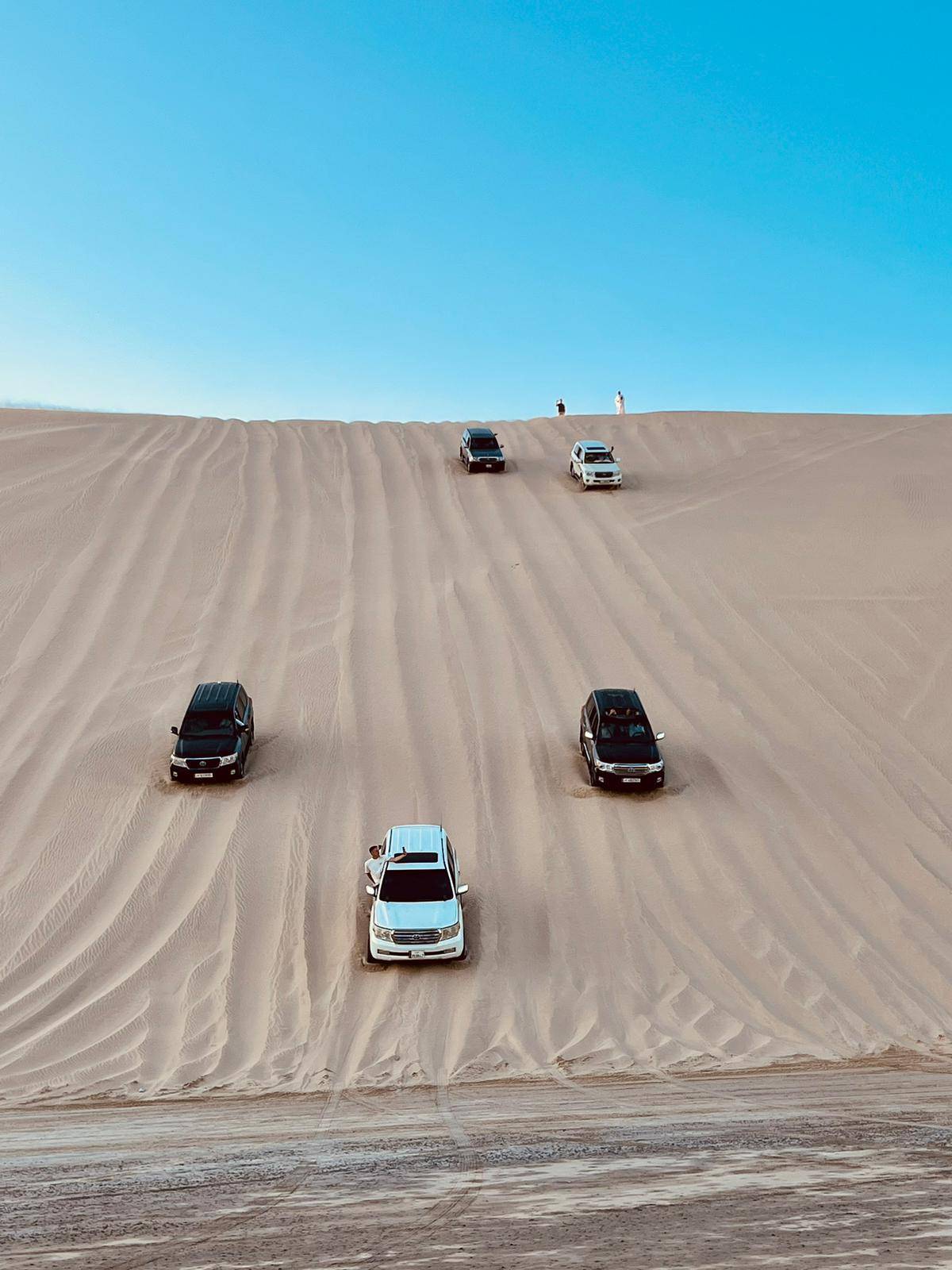
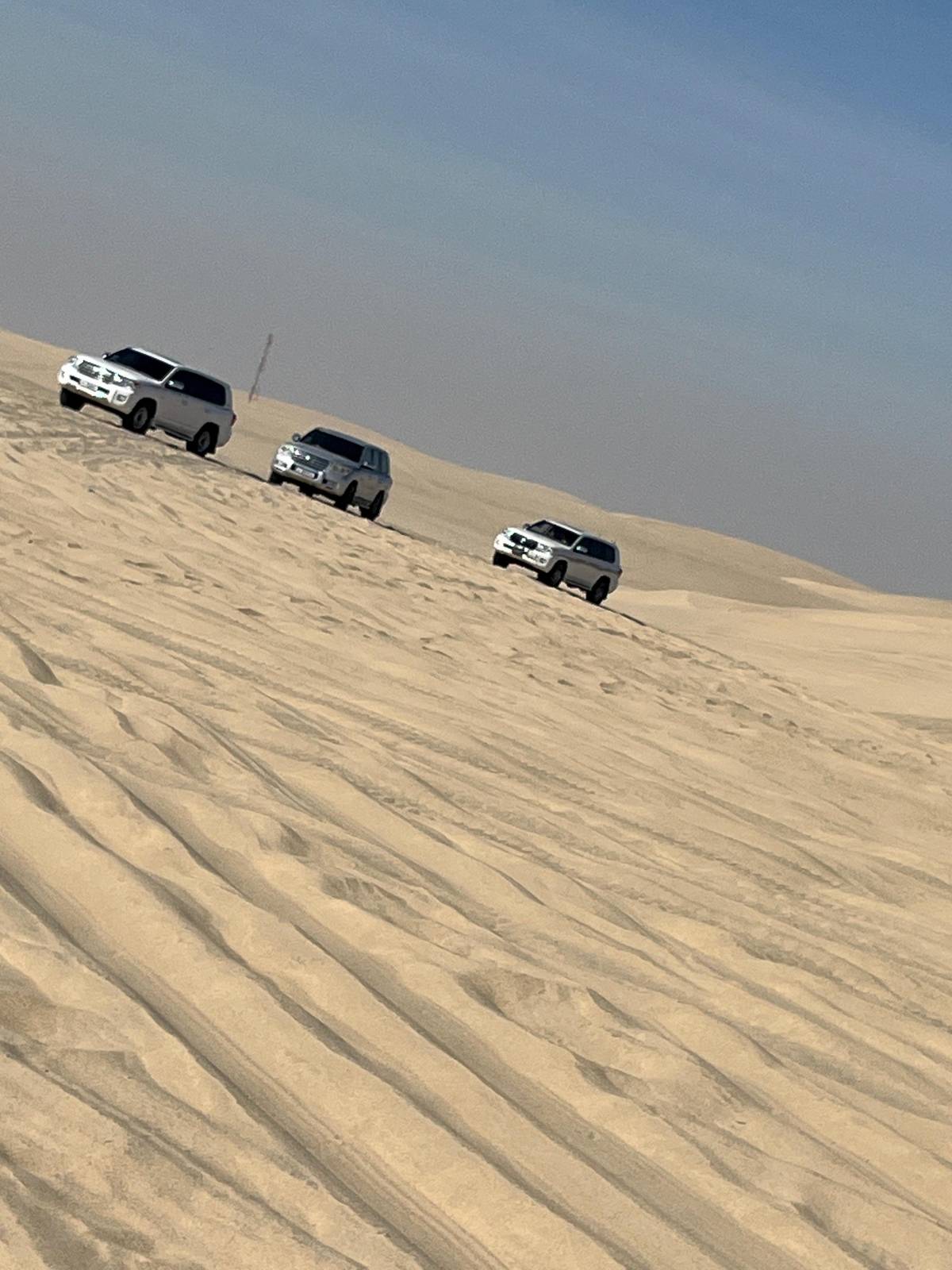
On a desert safari the board is part of the package. Our recommended trip includes sandboarding along with an air-conditioned 4x4, a guide, dune bashing, the Inland Sea visit, local tea and unlimited water. The quad and buggy trips from Doha also list sandboarding in their dune sessions.
Time on the board varies less than you might expect. Most of the listings compared here give it 15 to 20 minutes, with the longest dune sessions spent in the 4x4 rather than on the board. Use those minutes on the board rather than on photos, and you will fit in several runs.
Insurance is the item nobody packs. One Doha listing says its insurance covers passengers in its vehicles but not camel rides or sandboarding, and that travel insurance is required. Check your own policy for adventure activities before the trip, and keep the number of your insurer on your phone.
Your half day
A board, the dunes and the sunset.
Pick a date, meet at the metro or your hotel, and cancel free up to 24 hours before.


You ask,we answer.
What is a sand board made of?
A wooden deck with a slick base. Sandboards use an extra slick base material and special wax; one maker's sleds are maple and birch ply.15
What length of sand board should a beginner ride?
A shorter, stable one. One maker's range runs from 100 to 149 cm; its 105 cm terrain board is built for stability.311
Do I need to wax a sand board?
Yes, before every run. A light coat rubbed over the base before each run; one block lasts 4-6 sessions.4
Does a cardboard box work on a dune?
No. Cardboard, saucers and soft plastic dig into or drag on dry sand rather than sliding.16
Which shoes should I wear for sandboarding?
Closed sports shoes. Sandals are not adequate on hot sand, and one Doha safari requires sports shoes for the board.18
Is the board included on a Doha desert safari?
Yes, on trips that list sandboarding. Our pick includes sandboarding with the 4x4, guide, tea and water.
Is there a special wax for hot desert sand?
Yes. One maker sells a high-melt wax with hardeners for desert dunes in summer.8
Sources
What this guide is based on
- 1US National Park ServiceSandboarding and Sand Sledding - Great Sand Dunes National Park & Preserve↩
- 2US National Park ServiceSandboarding and Sand Sledding - Great Sand Dunes National Park & Preserve↩
- 3Venomous SandboardsSandboards↩
- 4Venomous SandboardsDoctor Dune's Speed Wax - 20 cubes↩
- 5Venomous SandboardsSand Sled adult↩
- 6Venomous SandboardsSand Sled adult↩
- 7US National Park ServiceSandboarding and Sand Sledding - Great Sand Dunes National Park & Preserve↩
- 8Venomous SandboardsDoctor Dune's RED HOT wax - 15 cubes↩
- 9Encyclopaedia BritannicaSnowboarding↩
- 10Venomous SandboardsSport 121cm - free ride↩
- 11Venomous SandboardsRaptor 105cm - terrain↩
- 12Venomous SandboardsSport 121cm - free ride↩
- 13US National Park ServiceSledding - White Sands National Park↩
- 14US National Park ServiceSledding - White Sands National Park↩
- 15Venomous SandboardsDoctor Dune's Speed Wax - 20 cubes↩
- 16US National Park ServiceSandboarding and Sand Sledding - Great Sand Dunes National Park & Preserve↩
- 17US National Park ServiceSandboarding and Sand Sledding - Great Sand Dunes National Park & Preserve↩
- 18US National Park ServiceFrequently Asked Questions - Great Sand Dunes National Park & Preserve↩
- 19Visit Qatar (Qatar Tourism)Desert Safari Adventures in Qatar↩